
Mercenary flying has been around almost since the first powered flight at Kitty Hawk. There was the Lafayette Escadrille in WWI. The Flying Tigers and the Eagle Squadrons during WWII. Numerous operations around the world in the 1950s and 1960s (the best know being Air America, the CIA-funded airline working out of SE Asia). Where are we at today?
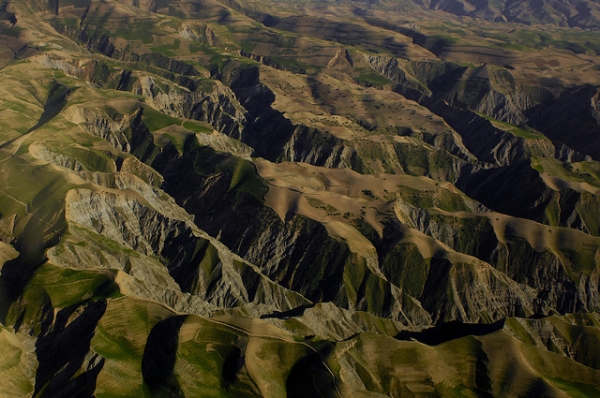
Photo by KerryMarasco licensed under Creative Commons Attribution 2.0 Generic.
The two wars in Afghanistan and Iraq led to a booming business for the modern mercenary. In today’s world they’re called “contractors.” US-based operators are usually working for the US Department of Defense. Generally, the pay has been very good and many pilots have jumped at the opportunity over the past 10 years.
As the US has lowered troop levels in the last couple of years, the hiring has fallen off. But now the companies have infrastructure in place and connections around the world, and they need to find more work for their planes. Given the instability worldwide these days I suspect there will be more work in the future. If not for the US DOD, then for big oil or humanitarian operations.
During the recent busy years of military contract flying I was mountain guiding and ferrying planes, so I missed out on a firsthand experience. To find out what the life was actually like for these pilots I sat down with an acquaintance who had spent some time flying out of Afghanistan.
Keep in mind that there were different types of flying being done, and experiences differed from company to company and pilot to pilot. In terms of hazards, I believe the rotorcraft pilots were at the most risk. There’s a story about a Blackwater helicopter pilot resupplying a squad that was pinned down. He made repeated trips, under fire, to the roof of the building the troops were holed up in.
Most of the fixed wing flying was ISR (surveillance) or lift operations, resupplying the bases. There were (and I think still are) some very lucrative flight instruction jobs training Afghan military pilots. Most of that is done with C-208’s and 182s. I heard that one instructor was stabbed by his student–so be careful. Other than that, the only fatalities I’ve heard on the fixed wing side were CFIT and a possible mid-air with a drone.
This discussion focused on the hiring process and the living and working conditions. There were non-disclosure issues with discussing the actual work, but I believe a lot of it was close to the base (within 40 NM) and often was in conjunction with US Rangers tracking down personnel involved in building IEDs.
It’s definitely not a job for everyone, and you’ll have a much easier time if you have prior military experience. But if you know what you’re getting into, it’s some interesting flying that pays quite well.
As our anonymous interview subject put it: “Yeah, it’s a war zone. You’re not living in a five-star hotel, and you’re potentially getting hit in the head with a rocket. But you’re making pretty good money too. That’s why they pay people good money.”
Even if you have no intention of pursuing this sort of work, you’ll find this interview an interesting read.
Interview Transcription
Oddball Pilot:
So once you got hired, what was the interview process like? I mean how did they contact you? Through email?
Military Contract Pilot:
No, I got a phone call.
Oddball Pilot:
Saying we’re interested?
Military Contract Pilot:
Saying we have your resume here, and just some basic questions on the type of flight time I had, my currency in the airplanes that they were flying, and just kind of some basic questions, my background, kind of confirming some stuff on the resume. It was a human resources person.
Oddball Pilot:
Right, right.
Military Contract Pilot:
And then two weeks later I got a call from a guy, who is an assistant chief pilot. It’s not really his official job, but it’s a big company, so he was kind of assistant chief pilot, and he called me.
Oddball Pilot:
But you’re in the flight department at that point.
Military Contract Pilot:
First it was HR, yeah.
Oddball Pilot:
Do you know what they were looking for on your resume in terms of … were they looking for specific aircraft time?
Military Contract Pilot:
They were looking for specific aircraft, and then my time in that aircraft.
Oddball Pilot:
Okay.
Military Contract Pilot:
I don’t think they cared about total time, but how recent had I flown that airplane. Was I current in that airplane?
Oddball Pilot:
Okay. You had actually gone and gotten a job to get current in a similar type of plane.
Military Contract Pilot:
Yeah, because I was not current in that airplane, so I went and got current, and then they asked basic questions about training. Have you ever been to flight safety, do you have a type rating, stuff like that.
Oddball Pilot:
Right.
Military Contract Pilot:
Just stuff that’s on your resume, but they want to confirm. That’s what HR was doing.
Oddball Pilot:
Right, that’s what I always thought, but I can never get through to anyone. I always figured it’s because they do a computer search looking for type of airplane and current, they don’t want to see it five spots down on the resume.
Military Contract Pilot:
Right, yeah you want to highlight whatever …
Oddball Pilot:
So if you want a CASA job …
Military Contract Pilot:
You want to put CASA up there.
Oddball Pilot:
You need CASA at the top. Co-pilot, right seat, left seat, it doesn’t matter too much. Okay, then you get through the flight department, and that’s when it narrows down a little bit.
Military Contract Pilot:
I was basically hired, the first one was the HR interview on the phone, real quick, and a couple of weeks later the assistant chief pilot called me, asked me a few questions, and then the third phone call, the second phone call from this guy, was when can you start ground school? And he said can you start ground school on this date? I said yes. He said we will send you an information packet and offered employment. You’re going to fill this out, they’re going to do a basic background check on the usual pilots stuff, FAA background check and stuff like that.
Oddball Pilot:
Right, yeah.
Military Contract Pilot:
And basically hired me over the phone contingent upon passing a little simulator check. They wanted to just make sure that …
Oddball Pilot:
You could fly.
Military Contract Pilot:
That you’re instrument current.
Oddball Pilot:
Yeah, and I think that’s pretty standard.
Military Contract Pilot:
It’s pretty standard, I would fly out there, have an interview, do the simulator, and then they would decide whether they wanted to offer me a job or not. But it sounded pretty solid after the phone interview. As long as I didn’t screw up.
Oddball Pilot:
Right.
Military Contract Pilot:
And whether they offered you a job or didn’t offer you a job, you were flying home. You had to fly out there on your own dime.
Oddball Pilot:
Right, right.
Military Contract Pilot:
So, I flew out there on my own dime, did the sim thing, did the interview. If they decided they didn’t want to hire me, I flew back on my dime.
Oddball Pilot:
Right.
Military Contract Pilot:
This company said that, basically, it was a formality. You’re going to start ground school on Monday, we’re going to do sims Saturday and Sunday, so you’re going to fly out on Friday and you’ll either have a sim on Saturday or Saturday/Sunday, and you start ground school on Monday. I don’t know any pilot that didn’t pass the sim of the 15 guys in that weekend. Basic instrument skills were all they were looking for.
Oddball Pilot:
So you’re thinking these companies are all going to be slightly different?
Military Contract Pilot:
They’re all going to be slightly different. And this company, I paid for my ticket out there, they paid for the hotel, the rental car and everything, and then as soon as I started ground school, they reimbursed me for my plane ticket, only because they had recently had people say, “Yes, we will come to work for you,” and then the day before call up and say, “We’ve changed our mind I’m not coming to work for you.” Now they’re into this nonrefundable thousand dollar ticket.
Oddball Pilot:
Right, right.
Military Contract Pilot:
So that’s the only reason that they have you pay for it, but they reimburse you afterwards. So, by the second phone interview, I was basically hired contingent upon passing the background check and a preliminary security clearance. You get a preliminary clearance about three or four days into ground school.
Oddball Pilot:
The security clearance is a lot of paperwork. The preliminary is when someone looks over your paperwork and says this looks good? Is this someone who should be eligible for a clearance?
Military Contract Pilot:
Barring anything we don’t know about this guy is good for a security clearance, he’s a citizen of the United States, never been in prison or whatever.
Oddball Pilot:
But then they look at what you put down in your job history and all that kind of crap, and if it looks normal, they’re like yeah, there’s no reason this person …
Military Contract Pilot:
By day three or day four of ground school, most of us were informed thatwe had a preliminary security clearance, and then we went through a couple classes that were classified. And the guys that were delayed on this preliminary clearance, they just pushed the class back. I don’t know if anybody who didn’t pass so this was basically they hired us off our resumes and a brief phone interviews.
Oddball Pilot:
Okay.
Military Contract Pilot:
It was very, very much different than the other company I interviewed with.
Oddball Pilot:
Right. Yeah I know the other company. So it is probably is going to differ quite a bit. I know at a lot of these companies you need an “in,” or it seems like you do, even though an “in” doesn’t always help. So let’s move on a little bit. So ground school lasted how long? Basic indoc?
Military Contract Pilot:
Own week of indoc. You probably have anywhere from one to two weeks of flight training, and that depends if you’re current or if you’re not current, initial or recurrent. Initial is two weeks. Basically it’s a type rating. You don’t technically have to have a type rating because it’s flying for the military, but it’s similar to a type ride. A week of simulator training, or a week of ground school and a week of simulator flight training. So probably three weeks, and then there’s some other stuff in there before you go overseas, weapons training and some classified briefings, and you have to go to pre-deployment, go to a base and get …
Oddball Pilot:
A pre-deployment check.
Military Contract Pilot:
Pre-deployment thing which is just like the GIs do. You get all the right vaccinations and getting all that kind of stuff done before you actually ship out.
Oddball Pilot:
Then there’s a waiting period? Or do you get shipped out right after that?
Military Contract Pilot:
Yeah, my company did, the guys that hired on just before me, it took them four, five weeks to finish all of the training required, and they shipped out right away. That was the plan. When it got to me, we’re on a bid system. We bid lines, and when it got to me and they posted the lines, it was almost two months from the time I finished ground school to the time I started to work. Because they had hired so many pilots so fast. So with me, five weeks of ground school and then I was off for two months before I started my first tour.
Oddball Pilot:
And you’re not getting paid for that either.
Military Contract Pilot:
I was not getting paid for that, but I did get paid fairly well for the groundschool.
Oddball Pilot:
Once you went over.
Military Contract Pilot:
So yeah, there’s always, you’ve always got to prepare for the security clearance in this type of job you have to be prepared for it to take three months from the time that you start ground school to the time you start work. I know some guys go right over …
Oddball Pilot:
But not all of them.
Military Contract Pilot:
So if you’re a paycheck to payday kind of guy. It might be kind of tough to swing with the security clearance. That’s the big thing.
Oddball Pilot:
You have to get through. Okay so four or five, up to six months before you head overseas, let’s kind of skip ahead to when you first arrived there. Did you fly in a military transport into Afghanistan?
Military Contract Pilot:
Civilian.
Oddball Pilot:
All the way to the base, that right?
Military Contract Pilot:
Yep, you go to the base, and it’s all civilian commercial air, buy a coach ticket. And the company I was with gets a company credit card to pay for hotels and all that stuf. I had a travel agent that take care of everything for us. It’s done through our own travel agent, but it’s all commercial travel. No military flights.
Oddball Pilot:
What about final travel to the military base?
Military Contract Pilot:
That’s commercial too. That’s a charter.
Oddball Pilot:
Really?
Military Contract Pilot:
Yup that’s commercial company. It’s a charter company. DFS it’s called. There were two flights, one of the flights was a Dubai Airlines flight, but it was chartered by DFS. They do a lot of charters. They would stop at a few places in Afghanistan, at a few the bases.
Oddball Pilot:
So when you first got to the base there was someone there to meet you? To meet the new people coming in.
Military Contract Pilot:
Someone is there to meet you. They call them FOMS, which are flight operations managers, kind of like dispatchers.
Oddball Pilot:
Did you go through an orientation when you first got there?
Military Contract Pilot:
Yep, they pick you up, they’re waiting for you at the airports, and you’ve got to do some initial badging. It’s a NATO base so you’ve got to do some initial badging, and you’ve got to have an ID badge to walk around base. They won’t let you out until you’re badged. It takes most of the day to do that.
Oddball Pilot:
Right, right.
Military Contract Pilot:
They give you a little briefing and a tour of the base. I mean it’s pretty self-explanatory.
Oddball Pilot:
Right. Living quarters?
Military Contract Pilot:
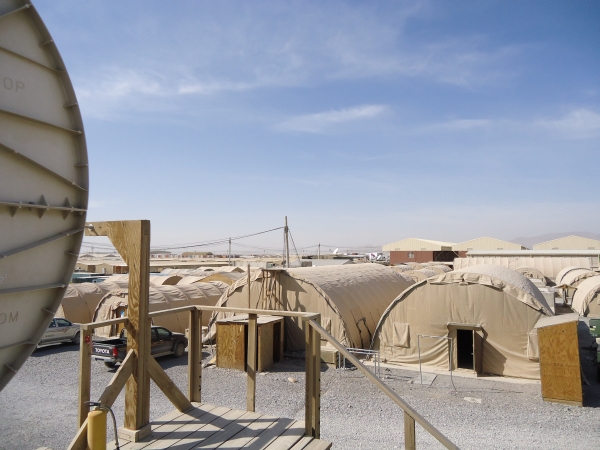
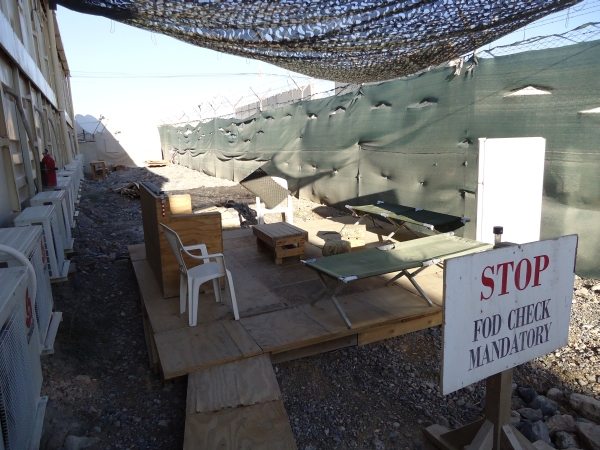
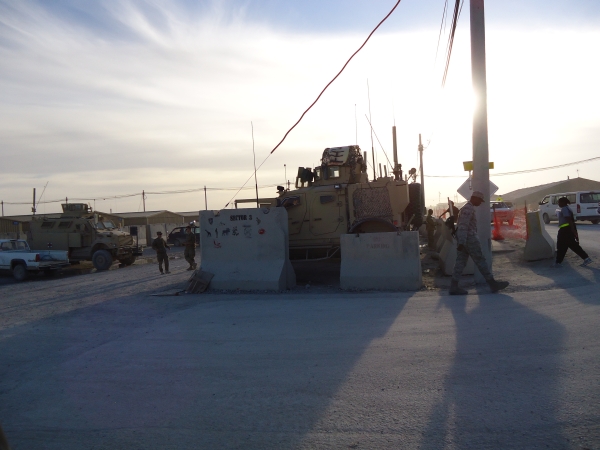
Living quarters are either in tents, which are actually pretty nice, a tent with a wooden floor, and then there’s partitions inside of it so anywhere from two to may be six people in these large tents, but everybody kind of has their own room in a tent, or RLBS they call them which are basically Conex boxes … metal storage containers. The military stacks as many as four guys in these things, like living in a submarine. We had two guys, and one door, one door in the front. So you’ve got a bed in the front. One guys living in the front half, and the other guy’s in the back half. So if you’re in the back half you’ve got to walk right by a guy’s bed to get to your room. So you only use them for sleeping.

Oddball Pilot:
And communal showers?
Military Contract Pilot:
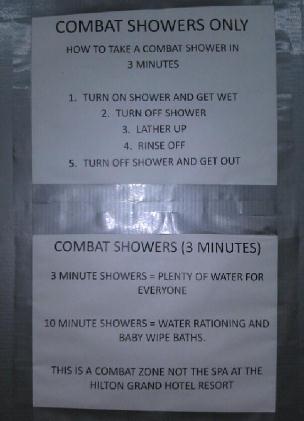
Communal showers, communal latrines, some of them where I was had a communal break room with Internet, TV. and video games and all that kind of stuff. It was nice. So your room … pretty much use it just for sleeping. There’s not a lot of space in there. So, you don’t want to stay in there anyway, but you might get a different shift than another guy. I might be working day shift, he might be working nights. So I get off work, he’s sleeping, and I want to go into my room, change and go take a shower.
Oddball Pilot:
And you have to go right by him.
Military Contract Pilot:
And it’s dark and you have to make sure you don’t wake up your roommate. So living quarters are basic, rustic. And that’s the big thing, you got to get along with this guy that you’re rooming with. I mean you’re thrown together with somebody you’ve never met before. But everybody seems to get along pretty well. I didn’t hear of any problems where guys didn’t get along.
Oddball Pilot:
I can imagine that’s part of their screening process. Like you said they like prior military people.
Military Contract Pilot:
They like prior military people, and my guess is just for that reason. They like people that are used to deploying, who are used to not living in a five-star hotel. There’s not a lot of privacy.
Oddball Pilot:
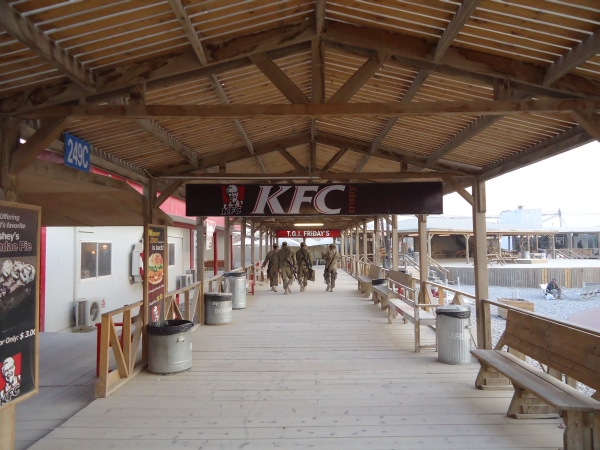
How about the amenities, I mean you’ve got TGI Friday’s.
Military Contract Pilot:
You’ve got restaurants, you’ve got coffee shops, you’ve got the good gyms, your laundry is done for you, lots of chow halls, good food.
Oddball Pilot:
You’ve got the crapper.
Military Contract Pilot:
You got a good crapper.
Oddball Pilot:
Only you got the …
Military Contract Pilot:
Shit smell.
Oddball Pilot:
Shit smell when you’re eating.
Military Contract Pilot:
The crap smell when you’re eating. You know that’s a lousy smell. I mean it’s not club med, it’s all dirt, there’s no grass anywhere. It’s dusty, it’s dirty. When it rains it’s muddy. I mean this is not a nice living place, but it’s comfortable. Like I said good gym, good food, we had vehicles, enough vehicles to get back and forth to work, also if you need to go take your laundry down or something.
Oddball Pilot:
Yep.
Military Contract Pilot:
So pretty much, all you’ve got to do is fly. That’s all you’ve got to do.
Oddball Pilot:
So do you guys mix with the military guys much on your off time?
Military Contract Pilot:
A little bit. It depends on where you live, but we live in a camp with military guys, so we mix with them a little bit.
Oddball Pilot:
OK.
Military Contract Pilot:
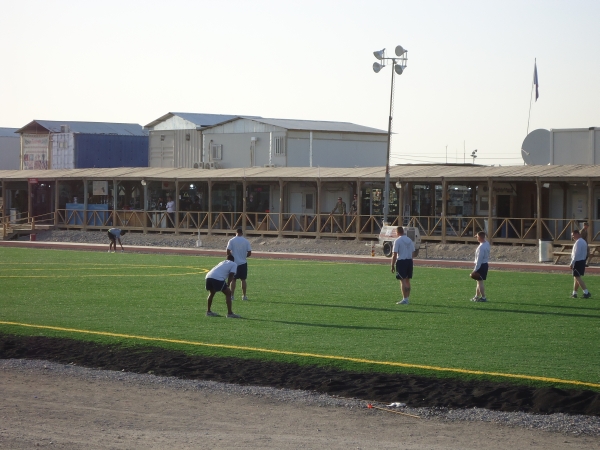
But I suppose like any job we kind of stick together. But of course you go to the chow hall with them, and you go to the gym with them, and a lot of our guys are ex-military, and they run into guys that they were stationed with in the military who are still in the military, so it’s kind of … it’s a community.
Oddball Pilot:
And they’re back there making twice as much money as military personal.
Military Contract Pilot:
Twice as much money.
Oddball Pilot:
So now let’s get to the security issues, because I’ve heard of guys going over there and they come back after one shift saying that getting shot at … they’re not going back come hell or high water. And you did mention that you do get rocket attacks frequently.
Military Contract Pilot:
Yeah, and all the bases I suppose are different, the base I was at is pretty secure. I mean the perimeter is pretty secure. There were some individual compounds that you live in that have separate security guards.
Oddball Pilot:
Are they military?
Military Contract Pilot:
Gated entry, these are contracted …
Oddball Pilot:
Okay, security guards.
Military Contract Pilot:
So I live in a gated, secure compound, with security guards and coded access, and nobody can get in.
Oddball Pilot:
Right, and your Conex box which is …
Military Contract Pilot:
Your Conex box … especially if you’re on the bottom, you’re probably pretty safe. Rocket attacks, you might get one every day for a week, and then you might not get any. I’ve had a few, I’ve seen a couple go over my head. I’ve had a couple and fairly close to me, but these things are not accurate. They’re lobbing them in there.
Oddball Pilot:
You’re supposed to jump in the shelter when they go off?
Military Contract Pilot:
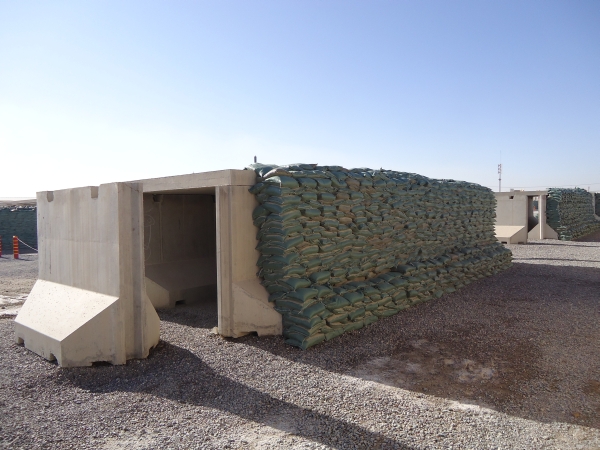
Yeah, after one rocket hits alarms go off. There are shelters all over the base. You’re supposed to go into a shelter before the all clear call. Usually15 to 20 minutes, so sometimes you’re doing that every day. Sometimes you’re hearing them go off, and sometimes you’re not, you just hear the siren. Quite often depending on where you live you’ll hear them.
Oddball Pilot:
Right.
Military Contract Pilot:
You hear the blast, but most of them are duds with very low explosives.
Oddball Pilot:
You said one landed 30 feet from you.
Military Contract Pilot:
Yeah, one landed about 50 feet from me and put a little bit of shrapnel in a concrete barrier.
Oddball Pilot:
So did it explode?
Military Contract Pilot:
It did.
Oddball Pilot:
Okay.
Military Contract Pilot:
But we’re talking, these are small …
Oddball Pilot:
Really small?
Military Contract Pilot:
Very, very, very small. The worst that can happen if one hits you on the head or lands right next to you, but …
Oddball Pilot:
So the small ones are like big firecrackers.
Military Contract Pilot:
A big firecracker, which could be dangerous. They are at times … dangerous, but boy, we’re talking a huge base here, and it’s like throwing a rock over a fence into someone’s yard and trying to hit them.
Oddball Pilot:
You were talking about when you are in the gym and everybody’s on the treadmills going, and you had a rocket attack.
Military Contract Pilot:
Rocket attack in the gym. Yup, you’re supposed to hit the floor, take cover, and then when the second siren goes off, you’re supposed to go into a bunker. If you’re in the chow hall, same thing, you’re supposed to get down on the floor. So wherever you’re at on base you’re supposed to take cover.
Oddball Pilot:
And the military guys are all pretty good about that?
Military Contract Pilot:
Military, yeah some guys don’t want to get off their treadmill. There’s a T-shirt over there that says, “Kandahar Airbase gym” and “The only thing that stops a workout is a rocket attack.” I’ve seen people just keep going on their treadmill.
Oddball Pilot:
They’ve got priorities. So you’re …
Military Contract Pilot:
There are so many rocket attacks that you just get immune to it. Oh… there’s another one … it’s no longer a big deal, I guess … until it hits you. But I mean you hear them, and it becomes kind of a routine over there. Many guys say that everything is nice over there, and all of a sudden now there are rocket attacks. So, they’re not going to work there anymore. Well there’s always been rocket attacks. There probably always will be.
Oddball Pilot:
Well I mean it’s a war zone.
Military Contract Pilot:
It’s a war zone.
Oddball Pilot:
People should understand that before they go.
Military Contract Pilot:
Yeah, it’s a war zone. You’re not living in a five-star hotel, and you’re potentially getting hit in the head with a rocket. But you’re making pretty good money too. That’s why they pay people good money.
Oddball Pilot:
Your planes are equipped with some defensive mechanisms?
Military Contract Pilot:
Yes some people’s plans have antimissile systems on them, flares …
Oddball Pilot:
Just your standard …
Military Contract Pilot:
Some planes, some companies don’t have them, some companies do. I don’t know if that’s a requirement depending on the contract.
Oddball Pilot:
Right, I would think the CASAjobs that I’ve heard about, it seems like they don’t have much protection.
Military Contract Pilot:
Yeah.
Oddball Pilot:
But they’re flying supplies around primarily I think.
Military Contract Pilot:
Yeah, that might be a civilian plane you’re flying too, if your contractor’s flying an Army airplane, you’re going to have one of these defensive systems on there.
Oddball Pilot:
Oh, that probably makes a big difference actually. What type of flying, you’ve got a bunch of different planes doing different types of duties. What types of missions and planes do contract pilots fly over there?
Military Contract Pilot:
Turboprops are real popular for ISR, for surveillance and reconnaissance, so King Airs, Dash 8s, Dash 7s, twin Otters, these are all really efficient, cost-effective, they fly slow, which is what you want when you’re doing ISR, you don’t want to be flying fast. Helicopters of course do a lot of transport, troop transports, supplies and equipment. You’ve got everything in the military you’ve got C-130 gunships, you’ve got fighter planes, you’ve got B-1 bombers, and you’ve got …
Oddball Pilot:
Drones.
Military Contract Pilot:
Predator drones which do a lot of surveillance, and do combat themselves, I guess they fire missiles. There’s 747 cargo planes coming in and out all day, shipping all the cargo in and out. There’s passenger planes coming in and out, busy busy busy, lots and lots of flying.
Oddball Pilot:
So I know there are 1900s over there as well, those are doing personnel transport?
Military Contract Pilot:
I think the 1900s are doing personnel transport, and we’ve got Caravans, I don’t know what the Caravans are doing.
Oddball Pilot:
Really?
Military Contract Pilot:
We’ve got Caravans there.
Oddball Pilot:
I’m the Caravan guy!
Military Contract Pilot:
Yeah, they’ve got Caravans. I don’t know who’s flying the Caravans, but …
Oddball Pilot:
I’ll look into that.
Military Contract Pilot:
So there’s Caravans, and mainly twin turboprops flying. 1900s and King Airs are the biggies. And of course the Air Force has their own King Airs and 1900s that they fly.
Oddball Pilot:
The surveillance stuff, you’ve got two types of surveillance, you’ve got the personnel surveillance … looking for people, and then you’ve got the surveillance for IEDs. What’s the difference? I know you might not know exactly what it is, but you mentioned twin Otters, they don’t fly as high. A King Air you’re going to be at 25,000 feet or something.
Military Contract Pilot:
Yeah, King Airs usually you might fly as low as 8,000 feet and as high as20,000 feet, but you’re fairly high, you don’t need to be low. And I think that the twin Otters fly, not that high, but they fly fairly high too on their missions. There is no low level stuff, the only low-level stuff that I know of would be transport stuff like CASAs. Transporting and landing at gravel strips, most of the flying is done pretty high.
Oddball Pilot:
It’s like the CASAs you talked about, they might be at forward operating bases that are fairly small.
Military Contract Pilot:
Right.
Oddball Pilot:
Did you hear anything about what the living is like at the forward operating bases? Is it different, more tents, little bit more rustic?
Military Contract Pilot:
I think it’s similar for smaller bases that are farther out, farther away from town. They’re smaller, but I think it’s a lot of the same, ROBs, Conex boxes, and tents and stuff like that. You’re not going to have obviously as much facilities as far as nice gyms and a lot of chow halls.
Oddball Pilot:
But you didn’t see any CASAs around? They’re my new favorite plane.
Military Contract Pilot:
I don’t think I’ve seen any CASAs, no, not where we’re at.
Oddball Pilot:
So what’s the actual flying like. You run on night shifts and day shifts? Planes are running 24 hours a day?
Military Contract Pilot:
Basically planes are running, or not one plane, you’ll have two planes to cover a target, say, and if so, there will be 24 hour coverage of the targets.
Oddball Pilot:
That’s for surveillance planes?
Military Contract Pilot:
Right, so one plane will be flying, and the second plane will come in to relieve them. You go back, and your plane gets down, they do maintenance on it, and then it goes back up to relieve the other plane. So we’re kind of jumping over each other to keep 24 hour coverage. So another reason for the twin turboprops is they’re very very reliable and they go all day.
Oddball Pilot:
And you fly at night?
Military Contract Pilot:
Yeah.
Oddball Pilot:
Someone in town, here in the states was talking about the planes that come back. Saying that they are always trashed because planes don’t break down over there.
Military Contract Pilot:
Yeah.
Oddball Pilot:
Because they have to always fly.
Military Contract Pilot:
They fly, and the maintenance guys do a great job keeping them up. I mean they do go down, we have to do 100 hours and stuff, but every few days they go down for 48 hours or so, but for 100 hours is standard, but they have enough planes going to cover it. If you do have a mechanical or something, you have another … there’s another plane. Even if it’s not a contractor plane, it might be an Air Force plane. Maybe it’s in an Air Force King Air, but somebody will come in to cover that target if it needs to be covered.
Oddball Pilot:
Let’s talk about the flying schedule. Did you fly every day, every other day?
Military Contract Pilot:
Again that’s going to depend on the company, it’s going to depend on where you’re at, it depends on how many pilots there are. For me, it was usually … maybe five days a week.
Oddball Pilot:
Okay.
Military Contract Pilot:
With a couple days off. The Army does have some regulations that you can only fly so many days, so many hours, so they have similar regulations that part 135 operators have.
Oddball Pilot:
You’re Army.
Military Contract Pilot:
Here you’re under all Army regs, but they are very similar to the FAA regs.
Oddball Pilot:
Well, the Army considers it combat flying.
Military Contract Pilot:
It is considered combat flying, you have to log at as a combat flight. It’s officially combat flying.
Oddball Pilot:
Wow, you’re getting combat time logged now.
Military Contract Pilot:
Yeah. And it’s the military lingo, military airspace. And so that’s a new learning curve if you’re not from the military before, it’s just different, they just talk differently.
Oddball Pilot:
What’s ATC? I mean … is it super busy on the radios when you’re up there?
Military Contract Pilot:
Yeah, there’s regular ATC around the bases, regular approach and towers, but once you get out into the rest of the country, it’s all military-controlled airspace.
Oddball Pilot:
Right, they control everything.
Military Contract Pilot:
It’s all military airspace, they own the airspace. So it’s different, they not only have different terminology, but their airspace is designed completely different than in the civilian world. So, this stuff, it’s easy, but it’s not if you’ve never done it before.
Oddball Pilot:
Right.
Military Contract Pilot:
It’s like being a private pilot flying in New York airspace.
Oddball Pilot:
I just had to run through airspace to get into ground school … that was bad enough. How does this compare to the stories of Air America and Vietnam era?
Military Contract Pilot:
No booze is allowed over there, and obviously you’re not going into town, and you’re not going to whore houses, and you’re not going to bars.
Oddball Pilot:
It’s just about work?
Military Contract Pilot:
You’re on base, and you’re working and that’s it. You’re going to the gym, so it’s absolutely nothing like Air America. There’s very little drama. If anything, it’s on the boring side, as far as the living conditions.
Oddball Pilot:
Even the rocket attacks?
Military Contract Pilot:
Even the rocket attacks get a little boring. Yeah … not so much … no night life.
Oddball Pilot:
But you are at a NATO base?
Military Contract Pilot:
I am at a NATO base.
Oddball Pilot:
Not all the bases are NATO bases. I’ve heard that the NATO bases are nice because you can go to the different country compounds and they might have different regs. If you’re on an Australian base or a French base …they have a different philosophy?
Military Contract Pilot:
The Americans have decided no booze.
Oddball Pilot:
Right.
Military Contract Pilot:
And it’s an Islamic country, so …
Oddball Pilot:
It’s probably more about you’ve got a bunch of 19-year-old kids with machine guns …
Military Contract Pilot:
Well you can get all the O’Douls you want.
Oddball Pilot:
But you can find booze if you go through the underground. Not that you would, but …
Military Contract Pilot:
There is some booze that can be found, like anywhere you’re not going to keep all the booze out, but it’s definitely not open. You wouldn’t throw a kegger over there and invite everybody. People keep it in their room.
Oddball Pilot:
Everyone pretty happy where you’re working?
Military Contract Pilot:
Everybody I worked with was really happy. There’s always the usual complaining, pilots like to complain, and there were some guys who liked to complain, but it was almost always exclusively someone not happy with a mechanic or not happy with a plane, or not happy with the schedule they were given. It’s almost all aviation related. Surprisingly I heard no complaining about the living conditions. Which you could do a lot of complaining about if you wanted to.
Oddball Pilot:
But ex-military are kind of used to it.
Military Contract Pilot:
Or being stuck on the base, or the food, or anything outside of the actual job. I didn’t hear any complaining. It’s quite surprising. And I think yeah, all these guys, most of these guys are ex-military, they’ve deployed before.
Oddball Pilot:
Right.
Military Contract Pilot:
So if you’re not used to deploying, you are probably not going to like it. Very little privacy, basic living conditions, but clean.
Oddball Pilot:
Any talk of, it’s over here in the papers all the time that the war is winding down. Any discussion over there, from everybody doing this work?
Military Contract Pilot:
I don’t hear anything more than what you would hear.
Oddball Pilot:
So people aren’t saying that this is going to be over pretty soon.
Military Contract Pilot:
It’s just like you hear. Everybody has an opinion. Some people say it’s going to be over in 18 months, other people say not, it’s going to keep going, I think the general consensus when we hear the president talking about ending the war, or whatever at the end of 2013. I think the general consensus is … people don’t take that with much more than a passing concern. Because it’s probably going to keep going, or at least we’re not combat troops, were not on the ground, so when they’re talking about ending the war it’s usually as an active combat role with troops.
Oddball Pilot:
Right.
Military Contract Pilot:
Surveillance and transport and all that stuff is going on a lot of places and contractors do lots of it, it’s going to go on, it’s going to go on forever … somewhere.
Oddball Pilot:
And the military doesn’t want to do that?
Military Contract Pilot:
The military does not want to do that.
Oddball Pilot:
Contractors do it.
Military Contract Pilot:
Yeah they’ve got limited resources.
Oddball Pilot:
But what I’ve seen recently is that when your standard troops are withdrawn there is probably going to be a pretty heavy special operations, special forces will probably be here for quite a while.
Military Contract Pilot:
Right. And I’ve got some guys that were flying in Iraq, and they’re not flying in Iraq anymore, but that was different. That was a complete withdrawal from the country, all American troops … all … it was a complete withdrawal, so they no longer had a job. But this Afghanistan, you’ve got to think there’re still going to be special forces, special ops going on. The Afghanis have no air force, we still own the air space.
Oddball Pilot:
Do you know if they’re training pilots now?
Military Contract Pilot:
In Caravans.
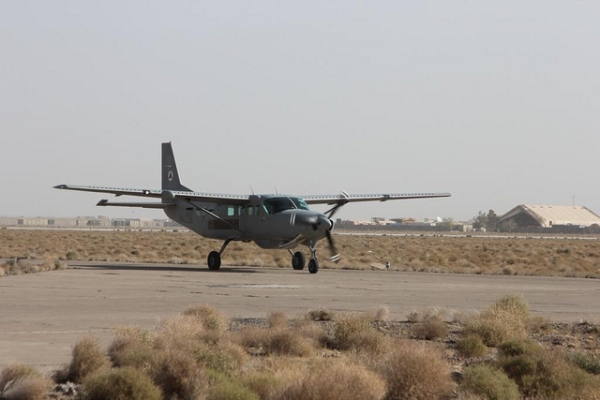
Photo by NATO Training Mission-Afghanistan licensed under Attribution-ShareAlike 2.0 Generic.
Oddball Pilot:
Caravans and 182’s.
Military Contract Pilot:
Yeah, that’s a hell of an Air Force.
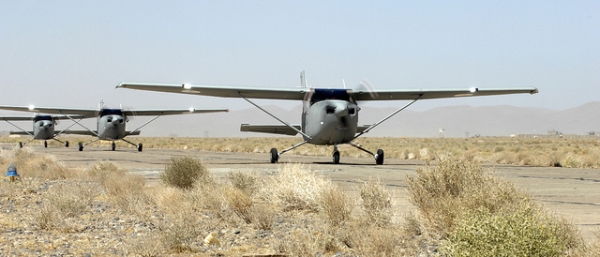
Photo by NATO Training Mission-Afghanistan licensed under Attribution-ShareAlike 2.0 Generic.
Oddball Pilot:
Yeah.
Military Contract Pilot:
Are they going to put some guns on them or are you just going to throw rocks off of them?
Oddball Pilot:
I think those are the training aircraft.
Military Contract Pilot:
I heard that the big cargo door you just dump a big bag of rocks out.
Oddball Pilot:
I told you one of the flight instructors was stabbed by a student. I think the New York Times had it.
Military Contract Pilot:
Dangerous out there, don’t piss them off … they’ll stab you.
Oddball Pilot:
More contractors are dying then military personnel these days. But a lot of them are interpreters. They’re local, Afghan contractors not Western contractors. I also heard about a new job in Iraq again. It’s sort of like there are some contractors moving back into Iraq, for whatever they’re …
Military Contract Pilot:
There’s going to be a lot of …
Oddball Pilot:
A lot of shit going on there.
Military Contract Pilot:
That’s the reason that we invaded Iraq instead of the French. We get all of the contracts, suckers. So there’s a lot of work over there, I wish I could tell you more about this as far as how long I’m going to be there
Oddball Pilot:
Details.
Military Contract Pilot:
No, as far as like how long we’re going to be there or what, I just don’t know any more than anybody who reads the papers. There’s no inside information over there. You just, you know contracts get renewed.
Oddball Pilot:
Yep.
Military Contract Pilot:
I don’t know if it’s for a year or two year, but every contract and of course like everything else gets renewed, so that’s all you can hope for is that it gets renewed for another year, you’ve got another year. You just go year by year.


No comments yet.